
Exhibition History
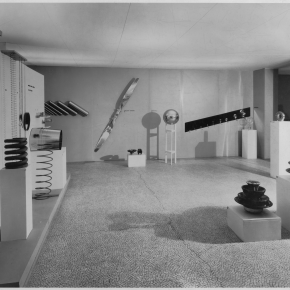
MoMA’s Exhibition History is a comprehensive account of the Museum’s exhibitions from its founding, in 1929, to today. Providing an unparalleled history of the presentation of modern and contemporary art on a widely available platform, the digital archive features over 3,500 exhibitions, illustrated by primary documents such as installation photographs, press releases, checklists, and catalogues,...
High Arctic
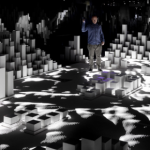
High Arctic was an interactive sound and light installation at the National Maritime Museum, created by United Visual Artists in response to a real-life expedition to the Arctic with Cape Farewell. According to Blueprint, High Arctic “could set the standard in exhibition design in London for the coming years.” High Arctic was selected for the...
Compass Lounge
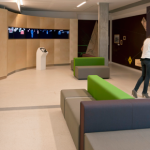
The Compass Lounge was a flexible space within the National Maritime Museum’s new Sammy Ofer Wing. Press accounts of the new Sammy Ofer wing noted the National Maritime Museum’s digital-led transformation: “Gives what was previously one of the less exciting options among London’s competing museums a much-needed digital shot in the arm.” (Creative Review) I...

Citizen Science
Citizen science projects use the time, abilities and energies of a distributed community of amateurs to analyse scientific data. In doing so, such projects further both science itself and the public understanding of science. The National Maritime Museum helped develop Solar Stormwatch and Old Weather. Solar Stormwatch won the Innovative category in the Best of...
Astronomy Photographer of the Year
Variously described as “wonders of the cosmos” and “the best space porn of the year”, Astronomy Photographer of the Year is an annual competition and exhibition at the Royal Observatory, Greenwich. Launched in 2009, it was the Museum’s first online community for amateur astronomers. Each year the programme continues to grow: in 2013 over 1,200...
The Science of Spying
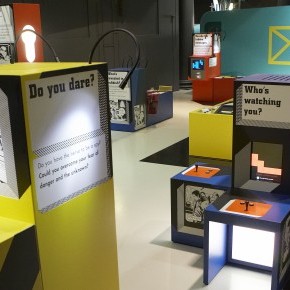
The Science of Spying was an issue-based exhibition for 8-12 year olds designed with an emphasis on social and interactive experiences. It opened at the Science Museum in 2007, where it attracted over 300,000 visitors, and then went on an international tour. It hit number 1 critic’s choice in Time Out (“It’s hard to imagine...
Children’s Digital Lives: risk scenarios to 2014
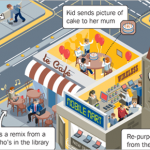
This 2004 scenario-planning project was undertaken at the BBC to inform its Charter Renewal submission, “Building Public Value: renewing the BBC for a digital world”. It identified three possible futures for children’s media usage: “Watching you, watching me”, “Paying to play”, and “Left to their own devices”. Download the explanatory poster (pdf) Credits Poster design...
Disney’s Virtual Magic Kingdom
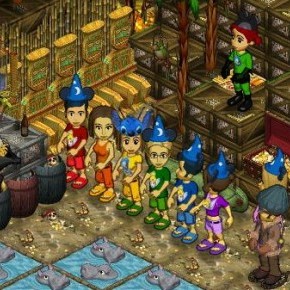
Disney’s Virtual Magic Kingdom was an online game for children that represented the physical theme parks and gave park visitors exclusive digital items. It was launched in 2005 as an ‘advergame’ for Disneyland’s 50th birthday celebration. The game was a groundbreaking example of an experience that intersected physical spaces and digital platforms: achievements in the...